A martini glass fails in one of three places, and none of them is the bowl you were admiring in the catalog. It chips at the rim, cracks at the stem, or splits from thermal shock in the dish pit. If you are buying stemware in bulk, the durability question is really three narrower questions about the glass, the rim, and how the glass is processed — and getting them right is what separates a case that lasts a season from one you are replacing by the dozen every month.
Where stemware actually fails
The rim is the most vulnerable part of any glass. It is the thinnest section, it makes first contact with faucets, racks, and other glasses, and a single chip pulls the piece from service for hygiene reasons. The stem is the second weak point: it concentrates the leverage of a full bowl into a narrow column, so any flaw there tends to find it. And thermal shock is the quiet third cause, cracking a glass that survived every impact simply because it went from a hot wash to a bin of ice too quickly. Every choice below is really about reinforcing one of these three points.
Soda-lime or crystal: the material sets the ceiling
Most commercial glassware is soda-lime glass, made from sand, soda ash, and limestone. It is affordable, consistent, and the sensible default for high-volume bars that expect to lose glasses to ordinary accidents. Lead-free crystal, sometimes branded as crystalline, replaces the old lead content with additives that let the glass be spun thinner while staying brilliantly clear, with better clarity and a finer rim than soda-lime can achieve. The trade-off is delicacy: a thin crystal bowl and sheer rim present beautifully but chip more easily unless the maker reinforces them. The material you pick sets the ceiling on both how refined the glass looks and how much abuse it can take.
Tempering: rim, full, or none
How a glass is cooled after forming matters as much as what it is made of. Annealed glass is cooled slowly to remove internal stress; it is the most affordable and, when it does break, it tends to come apart in a few large pieces that are easy to clear. Fully tempered glass is heated past its strain point and cooled fast, which raises impact strength substantially — published foodservice guidance puts it at roughly two to four times annealed — but it carries a real caveat for a bar: when it finally fails it can shatter violently into tiny shards, exactly the wrong behavior near an ice bin or a guest’s hand. Rim-tempered glass is the common compromise, concentrating extra strength at the rim where damage starts while keeping the safer break behavior of annealed glass elsewhere.
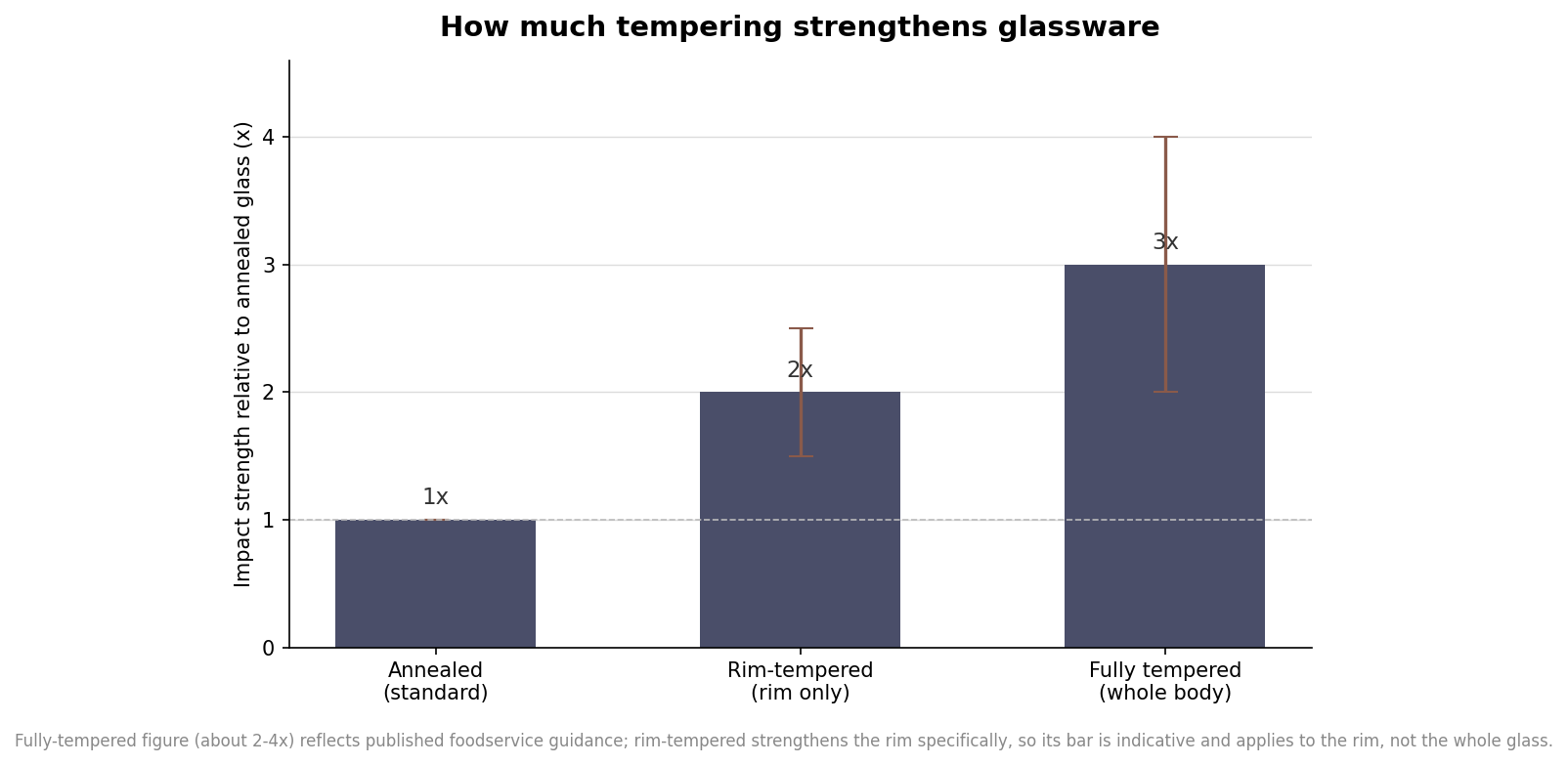
Read the chart as a strength-versus-safety story rather than a simple ranking. Fully tempered is the strongest on paper, but many operators deliberately choose rim-tempered stemware because it hardens the part that actually chips without turning a dropped glass into a shard hazard. For a martini glass that lives around ice and citrus, that trade usually favors the rim-tempered option.
Stem construction and rim treatment
Two construction details quietly decide how long a glass lasts. The first is whether the stem is pulled as one piece or joined. A pulled stem is drawn from the same gob of glass as the bowl, leaving no seam; a stem that is formed separately and joined introduces a weld line that becomes a stress point under the leverage of a full bowl. One-piece stems are the more durable choice for service, and machine-made stemware tends to hold tighter, more repeatable tolerances than hand-finished pieces.
The second detail is the rim treatment. A beaded rim is slightly rolled and thicker, which adds chip resistance at the cost of a heavier lip that some tasters feel changes the drink’s approach. A sheer, beadless rim looks elegant and pours cleanly but is more fragile unless the glass is crystal or the rim is reinforced. Neither is wrong; the beaded rim leans toward durability and the sheer rim toward presentation, and the right pick depends on whether the glass is a workhorse or a showpiece.
How to spec for your service
Bring the choices together against how the glass will actually live. A high-volume cocktail bar running glasses through a machine dozens of times a night is well served by rim-tempered soda-lime with a one-piece stem, accepting a slightly heavier look in exchange for fewer chips. A fine-dining room presenting a signature martini can justify lead-free crystal with a sheer rim, provided staff handle it gently and let it cool before it meets ice. The positioning chart below sketches that trade-off across common builds.
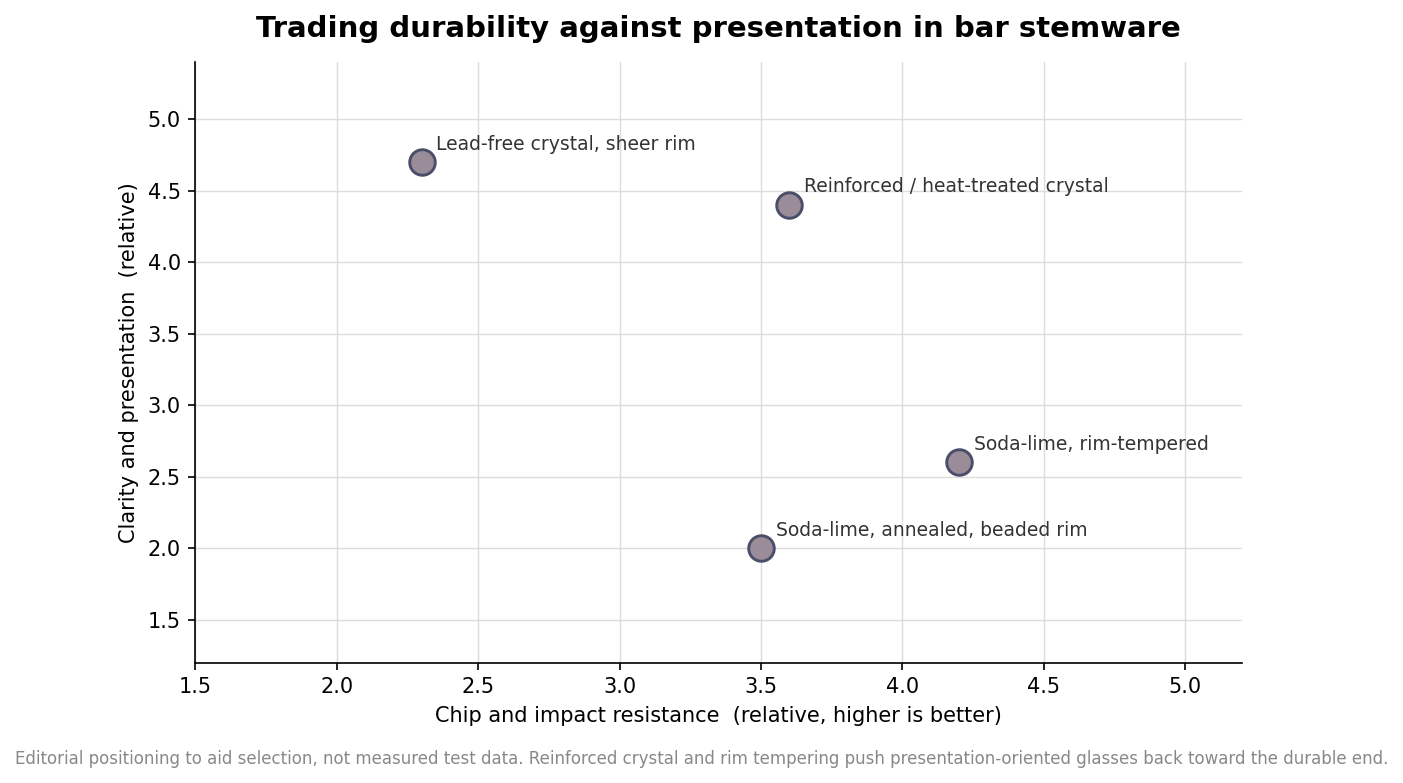
Whatever you choose, control the thermal-shock risk in the wash: let glasses settle toward room temperature after the machine before you fill them with ice, and never pour a cold drink into a glass straight from a hot cycle. It is also worth asking a supplier whether the line carries a rim-and-foot chip guarantee, since those programs exist specifically because the rim and foot are where stemware dies. Finally, order a small sample and run it through your real glasswasher and racks for a week before committing to a full order — the dish pit, not the showroom, is where a martini glass proves whether it was worth buying.